

Permanent project
Religion
Growing in Faith, Love and Fraternity
Rationale
Childhood is a crucial time for building bonds, values and identity, and for the first ways of understanding oneself, others and the world.
This is why religious education in early childhood must be playful, affectionate and experiential, respecting each child’s characteristics and pace of development.
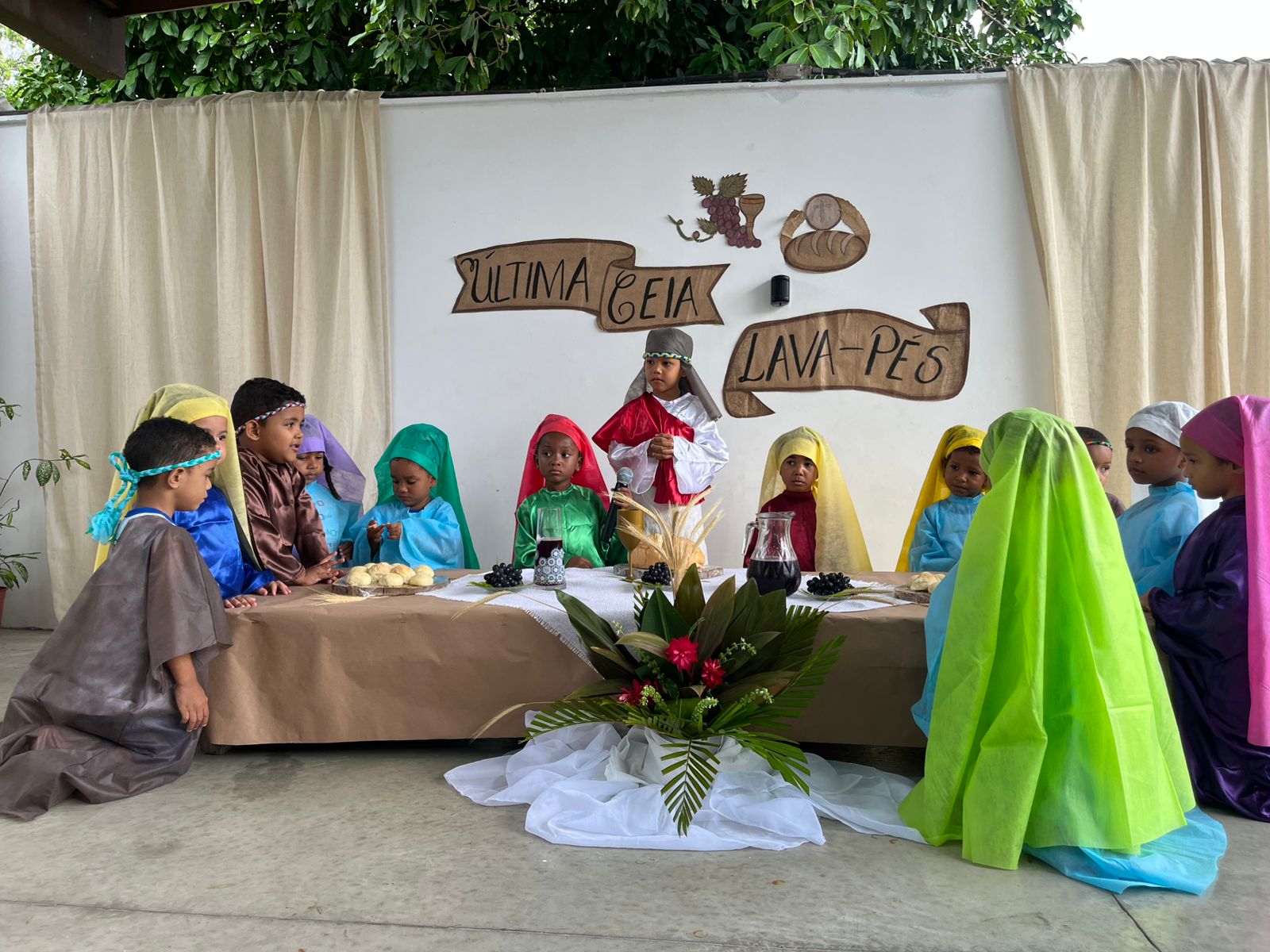
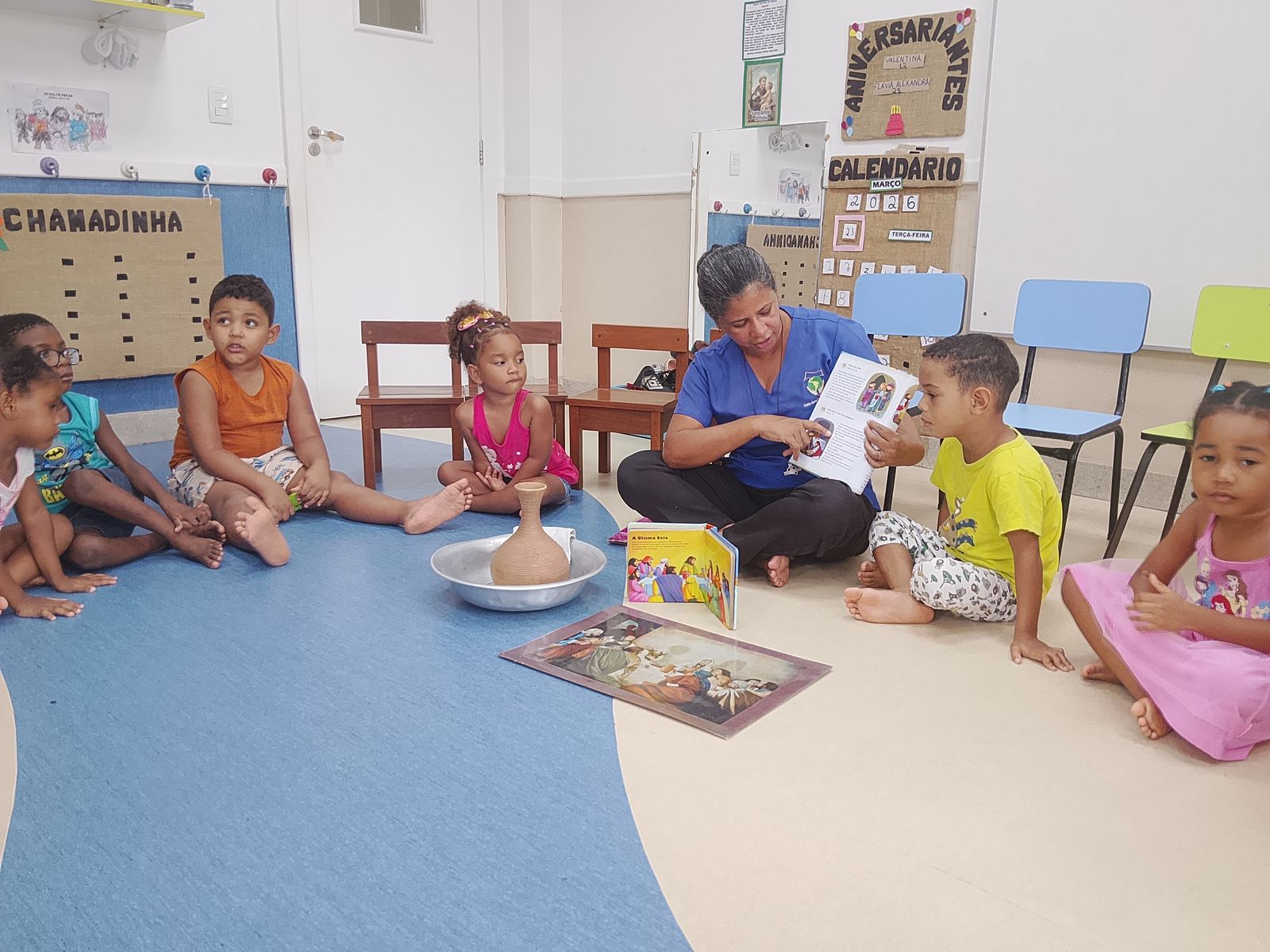
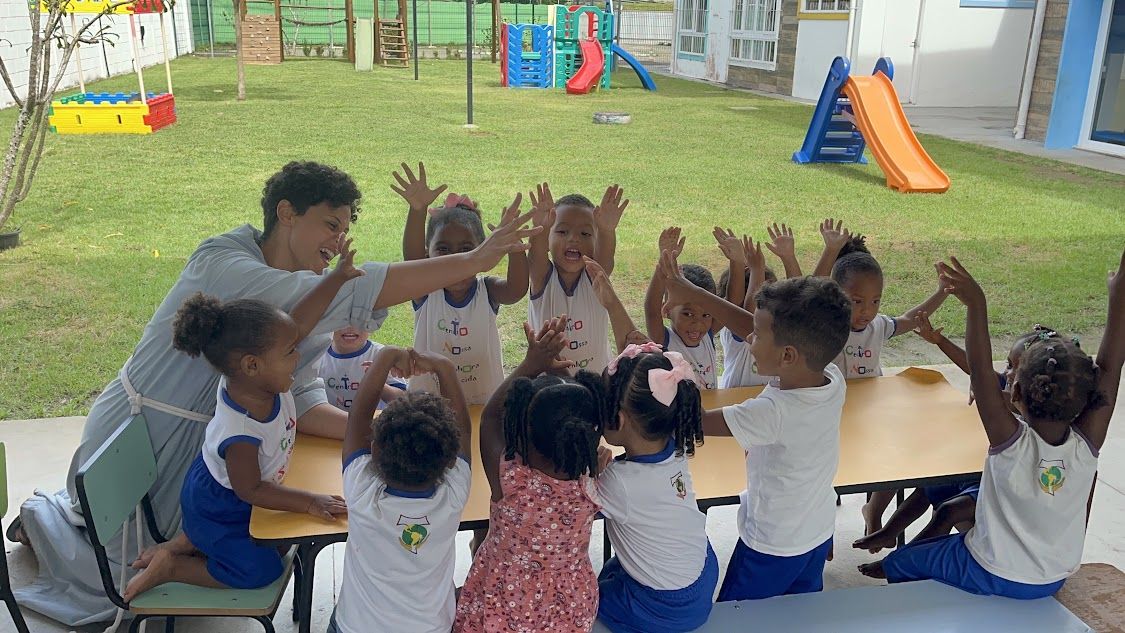
Through stories, music, games, gestures, images, experiences in nature, moments of prayer, small celebrations, group activities and sharing, children are invited to discover values that foster living together and recognising others.
The approach is also linked to the principles of the BNCC (Brazil’s national curriculum) for early childhood education, especially the rights to live together, play, take part, explore, express themselves and get to know themselves, recognising that holistic education involves experiences that help build identity, autonomy, relationships and respect for differences.
General aim
To promote experiences of human and Christian formation that allow children to discover and live, in a playful and meaningful way, values inspired by the Catholic faith, contributing to their holistic development and to building relationships based on love, respect, peace, fraternity and care for others.
How it works
Religious education is not limited to a “religion lesson”: it is understood as an experience that runs through the children’s everyday life.
The sessions are organised as moments of:
Children are encouraged to talk, ask questions, act out, draw, sing, move and express what they have understood and felt. In this way, the religious experience is in dialogue with the school’s participatory educational approach.
Living the faith
Throughout the year, children follow and take part in meaningful moments of the Christian journey, always in an age-appropriate way. These include:
- Advent, Christmas and the birth of Jesus;
- Easter and the celebration of life;
- moments dedicated to the Virgin Mary and celebrations of Nossa Senhora Aparecida;
- the life and teachings of Saint Francis of Assisi and other saints;
- moments of thanksgiving and celebrations of life;
- acts of solidarity, care and fraternity.
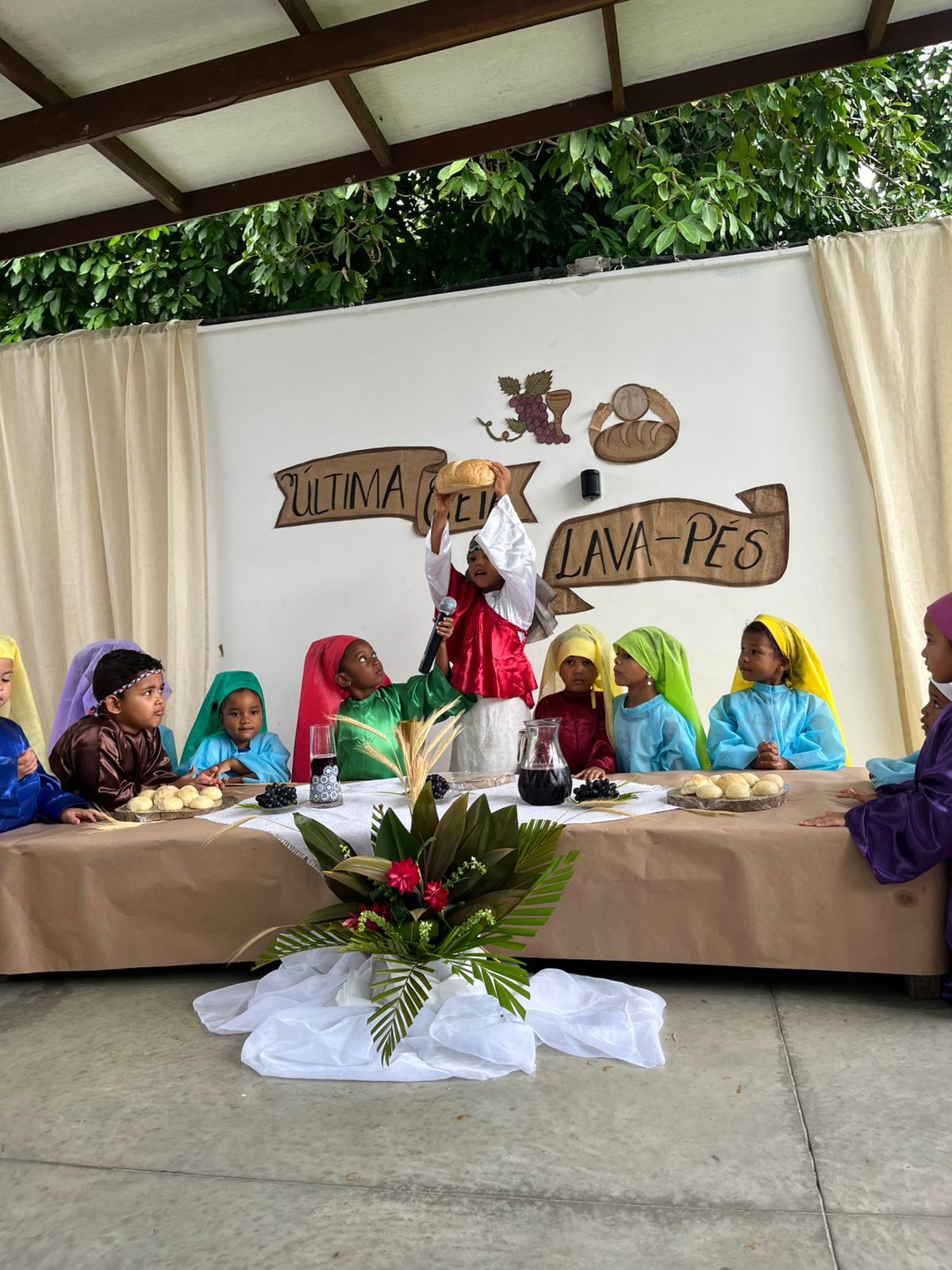
These experiences allow children to discover symbols, gestures, prayers, songs, celebrations and other expressions that belong to the Catholic tradition and are part of the school’s religious identity.
Organisation by age group
Ages 0 to 3
Experiences have a strong sensory, emotional and symbolic character. Priority is given to music, gestures, short prayers, images, short stories, contact with nature and experiences related to love, care, welcome and gratitude.
Ages 4 and 5
In addition to the experiences above, conversation circles, Bible stories, drama, artwork, explorations of symbols and celebrations, acts of solidarity and moments when children can ask questions and express their own understanding may be offered.
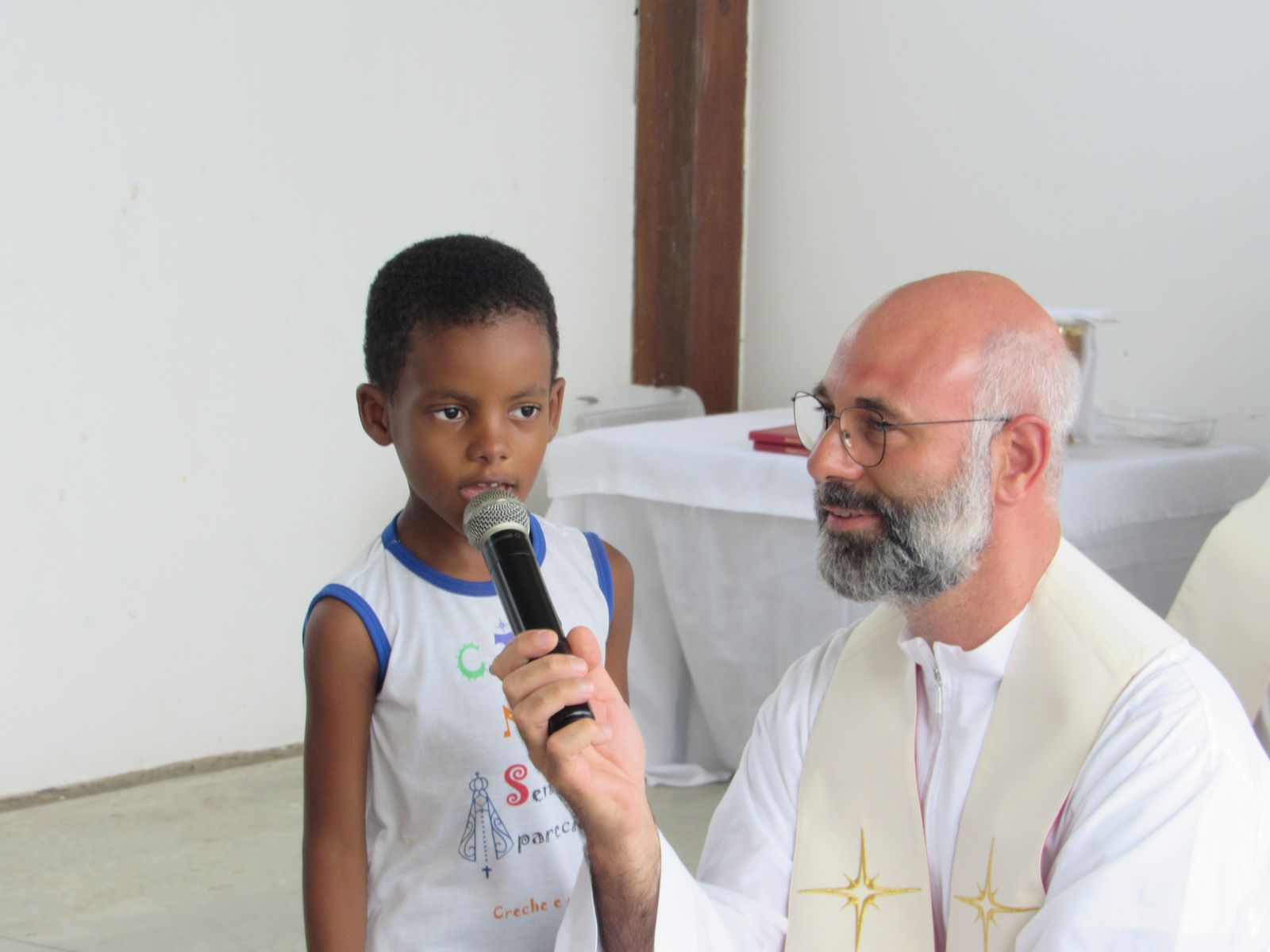
Guiding principle
Religious education is carried out with welcome, dialogue and respect for the dignity of each child and their family. The school’s Catholic identity is expressed through witness, relationships and experiences lived every day.
Forming children in faith therefore also means teaching them to welcome, care, share, give thanks, forgive, respect differences, recognise others and care for creation.
More than talking about love, we want to create opportunities for children to experience love. More than talking about fraternity, we want them to learn to live as brothers and sisters.
In this way, religious education becomes part of the child’s holistic development, helping them grow in faith, hope, respect, sensitivity and commitment to others and to life.
The project in pictures
Discover the pedagogical approach
Religious education is in dialogue with the nursery school's participatory educational approach.